Skip to content
NFPA 96-Focused Cleaning Before & After Photos After-Hours Scheduling Ontario-Wide Coverage Call 647-905-9389 Signed Compliance Certificate Every Job Insured to $5,000,000

Commercial kitchen exhaust cleaning services in Ontario

Commercial Kitchen Exhaust Cleaning is the NFPA 96 process of stripping cooking grease from the four components of a kitchen exhaust system — the hood, the baffle filters, the grease duct that runs from the hood to the roof, and the rooftop or inline exhaust fan. Ontario Hood Cleaning performs all four services on a single overnight visit, photographs every surface before and after, and ends every job with a written, dated, signed NFPA 96 compliance certificate that goes straight into the operator's inspection binder and insurance file.

Last updated: May 16, 2026

Our four commercial kitchen exhaust services

Each service is offered as part of a full-system cleaning, or as a standalone job when one component has fallen behind schedule. Tap any card for full scope, frequency, and pricing detail.

Service 01

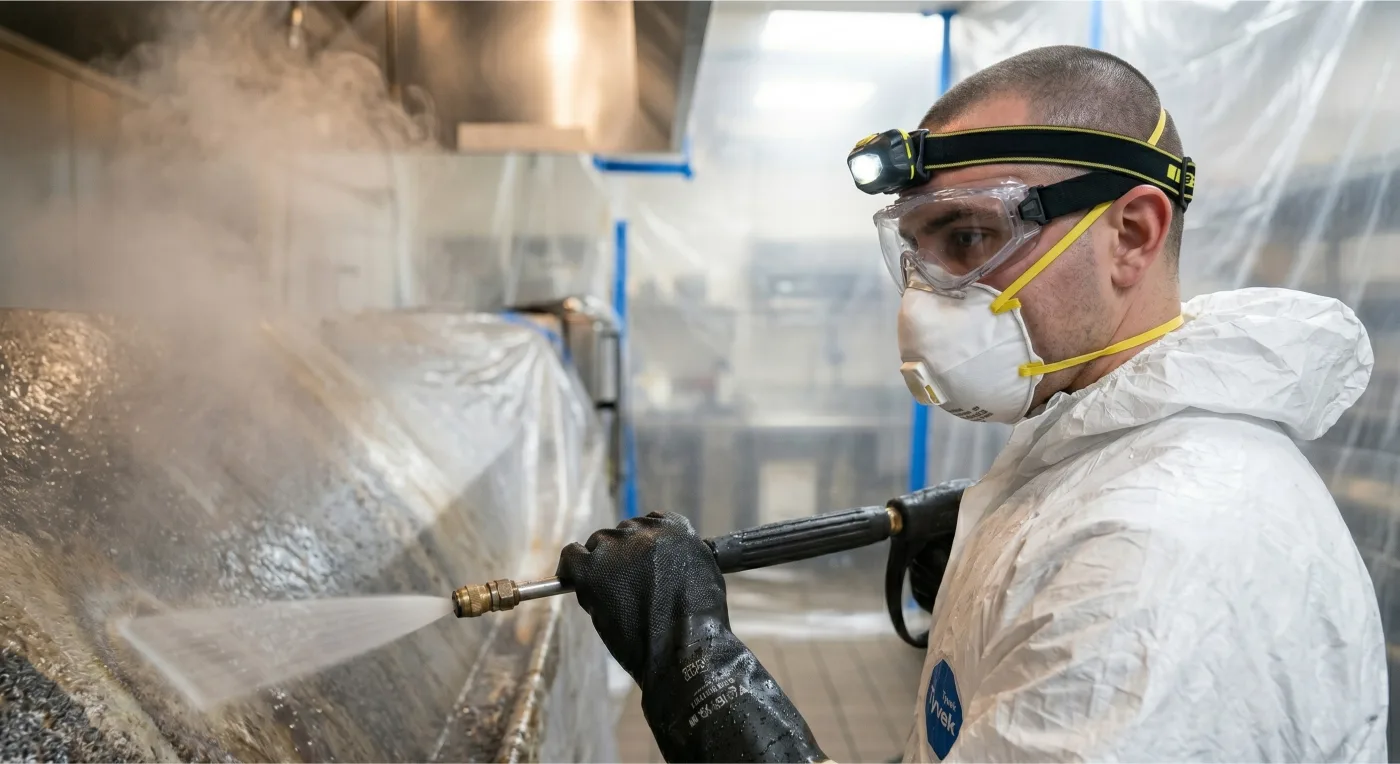
Commercial Hood Cleaning

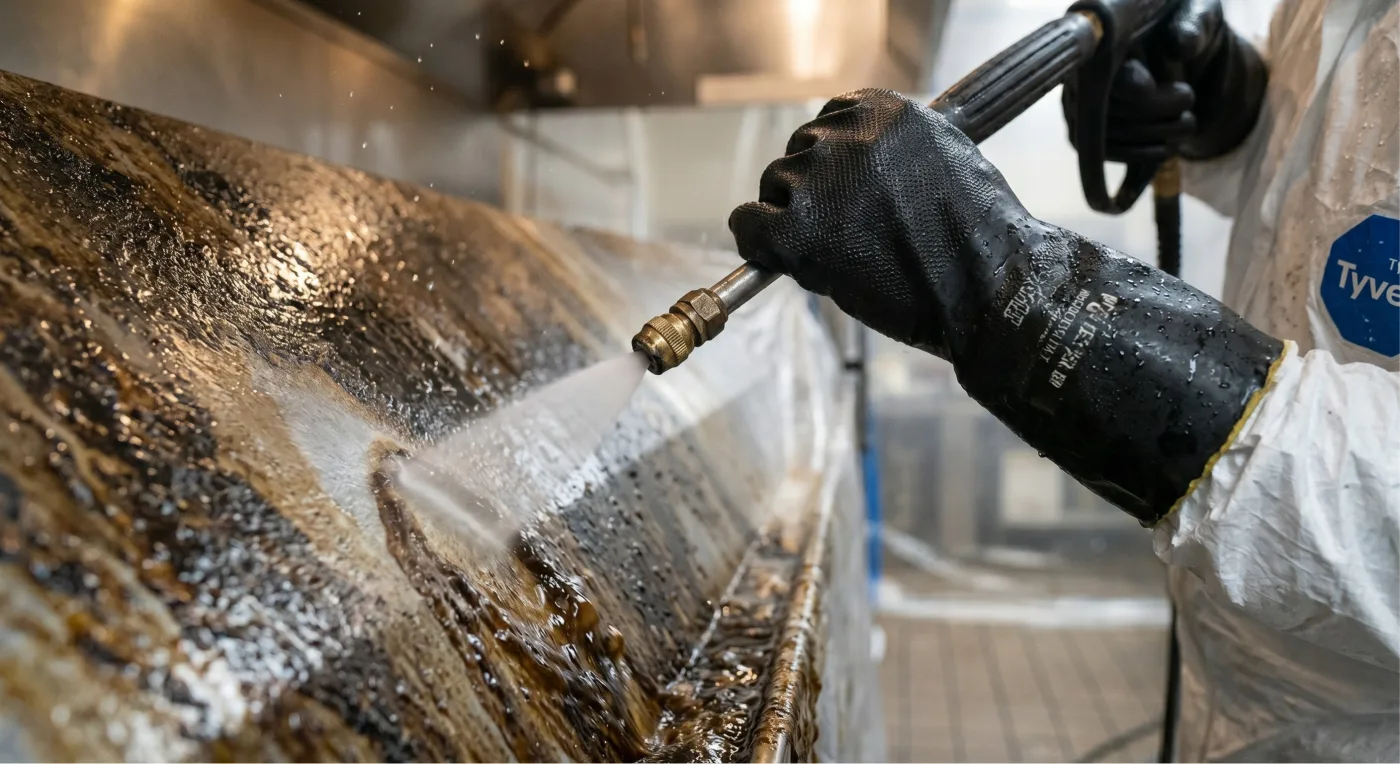
The visible heart of the system — the stainless-steel canopy over the cooking line and the plenum chamber behind the baffle filters where grease accumulates fastest.

  • Interior plenum scraped to bare metal
  • Baffle filter racks pulled, soaked, reinstalled
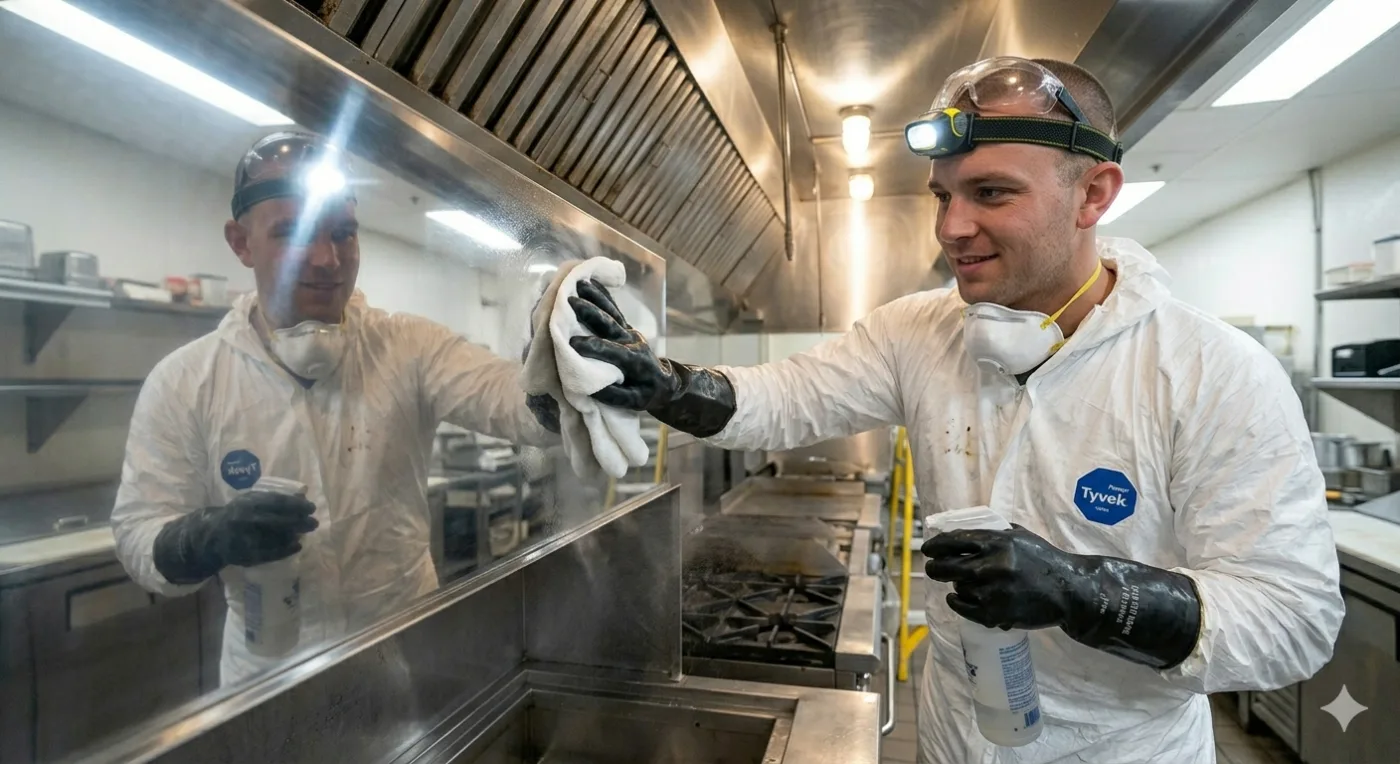
  • Exterior canopy degreased and polished
  • Photo report and signed certificate
Read scope, frequency, pricing →
Service 02

Exhaust Fan Cleaning

The rooftop or inline fan that pulls grease-laden vapour out of the kitchen. The hardest-to-reach component, and the one most often skipped by competitors who price on a per-hood basis.

  • Fan housing degreased, blade-pack pulled
  • Belt and bearing inspection
  • Hinge kit installed where missing
  • Fan-house gasket reseated and sealed
Read scope, frequency, pricing →
Service 03

Grease Duct Cleaning

The hidden vertical and horizontal ductwork running from the hood plenum to the rooftop fan. This is the component an Ontario fire inspector cares most about because grease accumulation here is what fuels duct fires.

  • Access panels opened or added where required
  • Duct interior hand-scraped along full run
  • Depth-gauge reading recorded pre and post
  • Access panels resealed to NFPA spec
Read scope, frequency, pricing →
Service 04

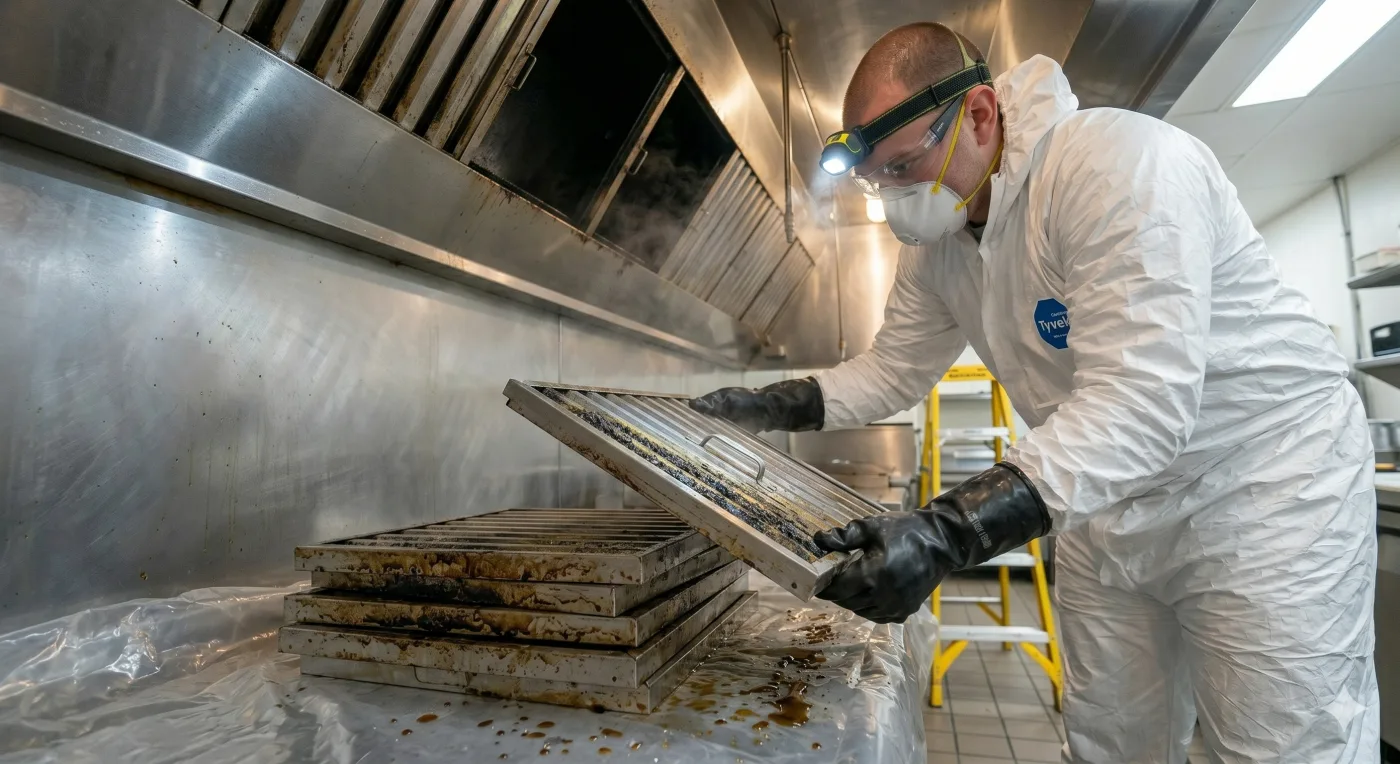
Baffle Filter Cleaning

The stainless-steel filters that sit in the hood and catch airborne grease before it enters the duct. Operators wipe these down weekly; we hot-soak them on every scheduled visit and replace damaged or missing filters at cost.

  • Filters removed and inventoried
  • Hot-soaked in commercial degreaser tanks
  • Rinsed, dried, reinstalled in hood
  • Damaged or missing filters replaced at cost
Read scope, frequency, pricing →

NFPA 96 is the umbrella standard

The published code that governs every line item in every one of our four services.

NFPA 96 — the National Fire Protection Association's Standard for Ventilation Control and Fire Protection of Commercial Cooking Operations — is the technical baseline for everything we do. The Ontario Fire Code adopts NFPA 96 by reference, which means an Ontario fire inspector evaluating a commercial kitchen exhaust system is looking at the same checklist our crews follow on every job.

Concretely, that checklist defines which surfaces must be cleaned to bare metal, how often cleaning has to happen based on cooking volume, what documentation has to accompany the cleaning, and what the Authority Having Jurisdiction is allowed to require when the documentation is missing. Our four services map one-to-one onto the NFPA 96 surface list. If a surface is on the list, we clean it; if it is not on the list, it is not in scope.

A standalone hood-cleaning job that leaves the duct or fan untouched does not satisfy NFPA 96 and does not produce a defensible compliance certificate. That is why every full-system visit covers all four services together. Operators who buy a partial cleaning are usually doing it to pass a single inspection, not to maintain a code-compliant system.

What every cleaning visit includes

The line items on every service ticket, regardless of which of the four services were performed.

Standard inclusions on every Ontario Hood Cleaning visit

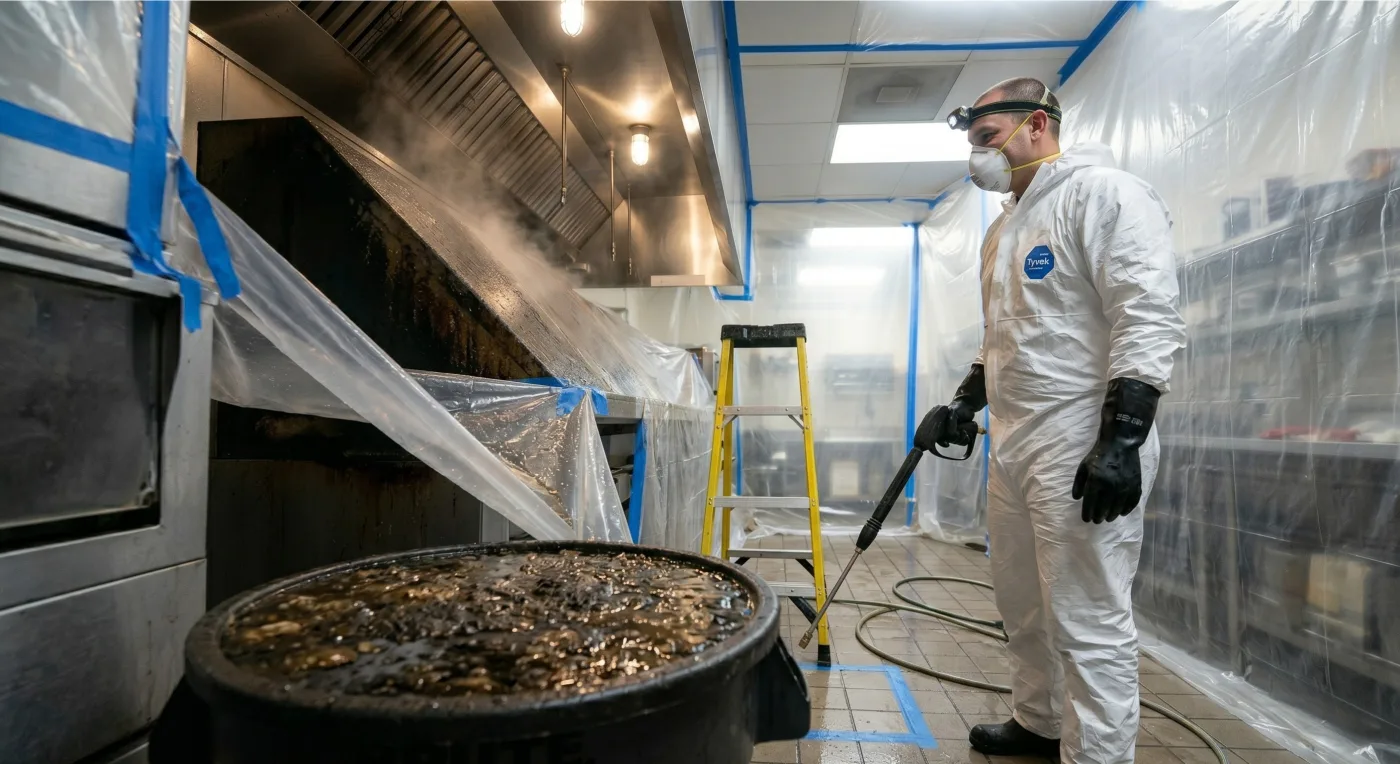
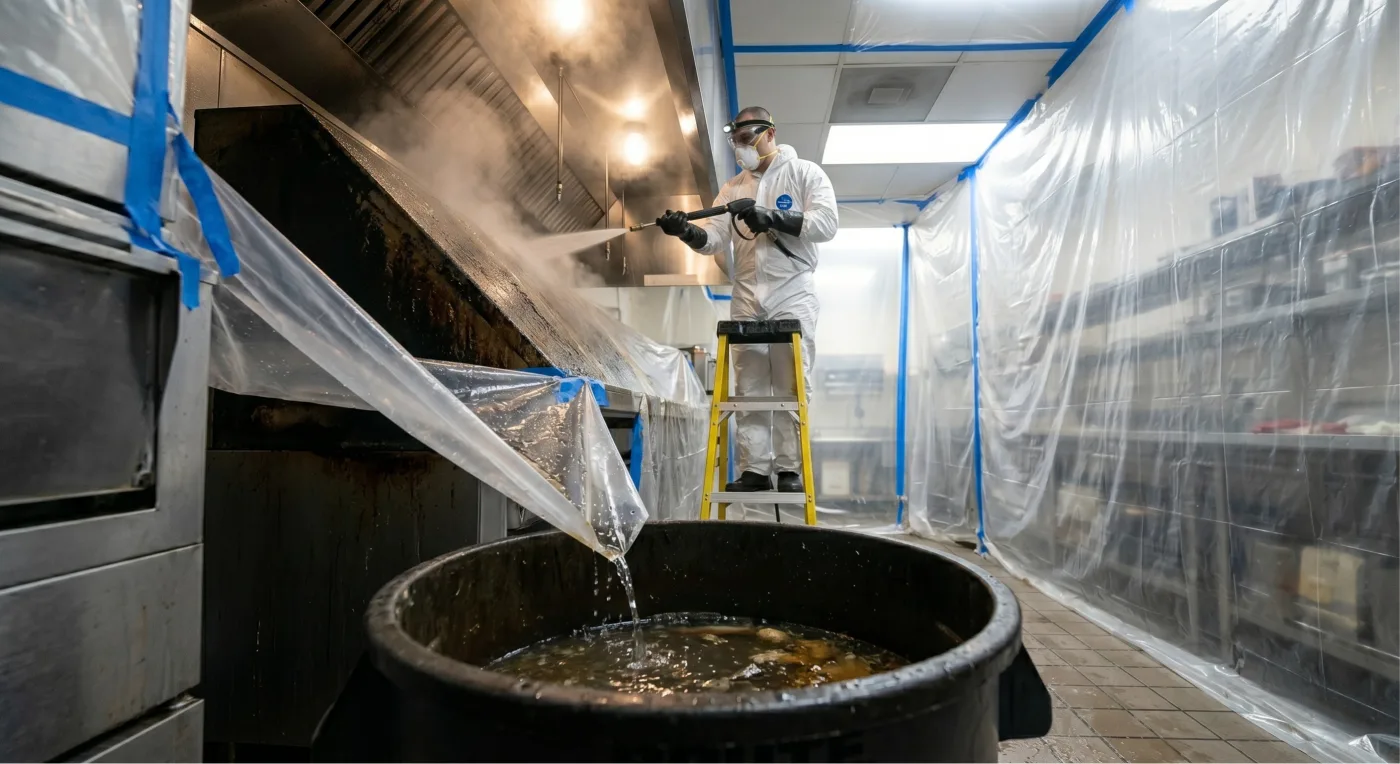
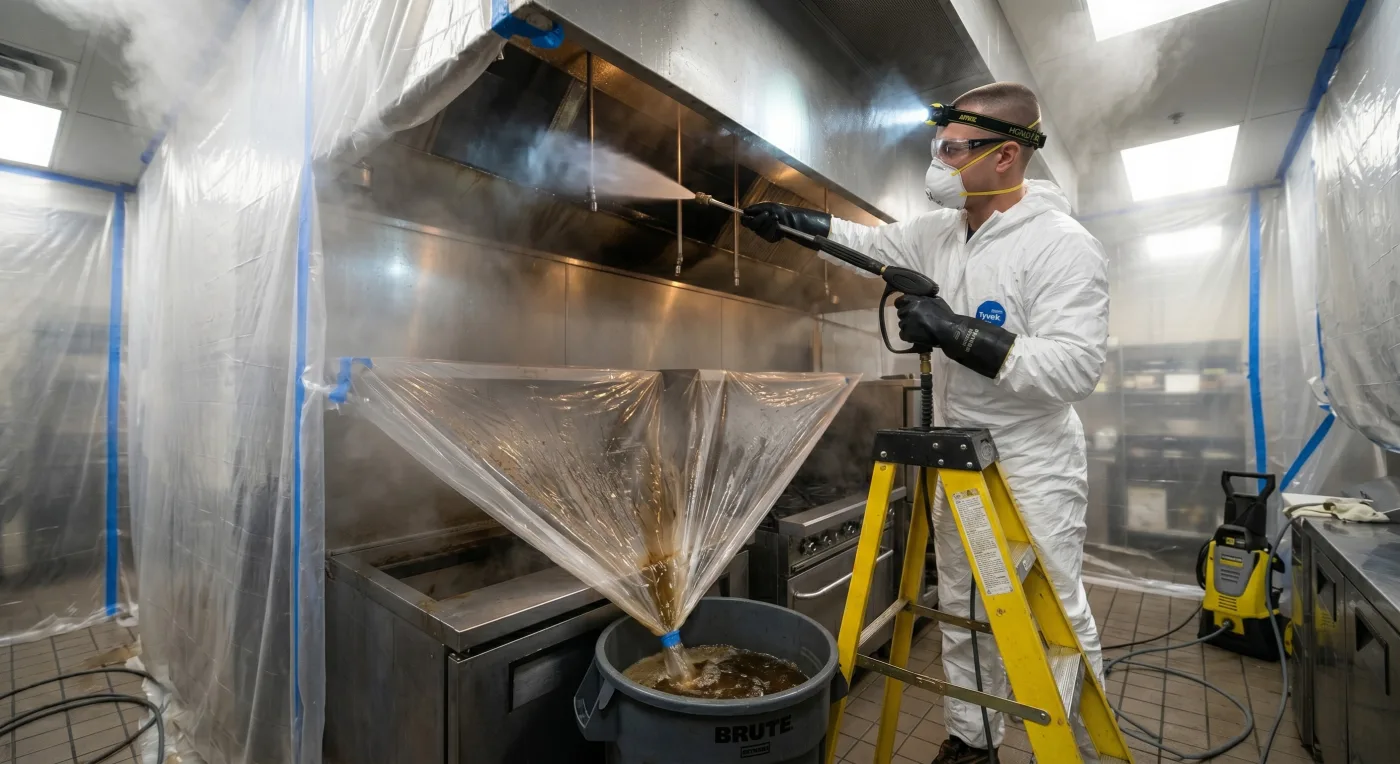
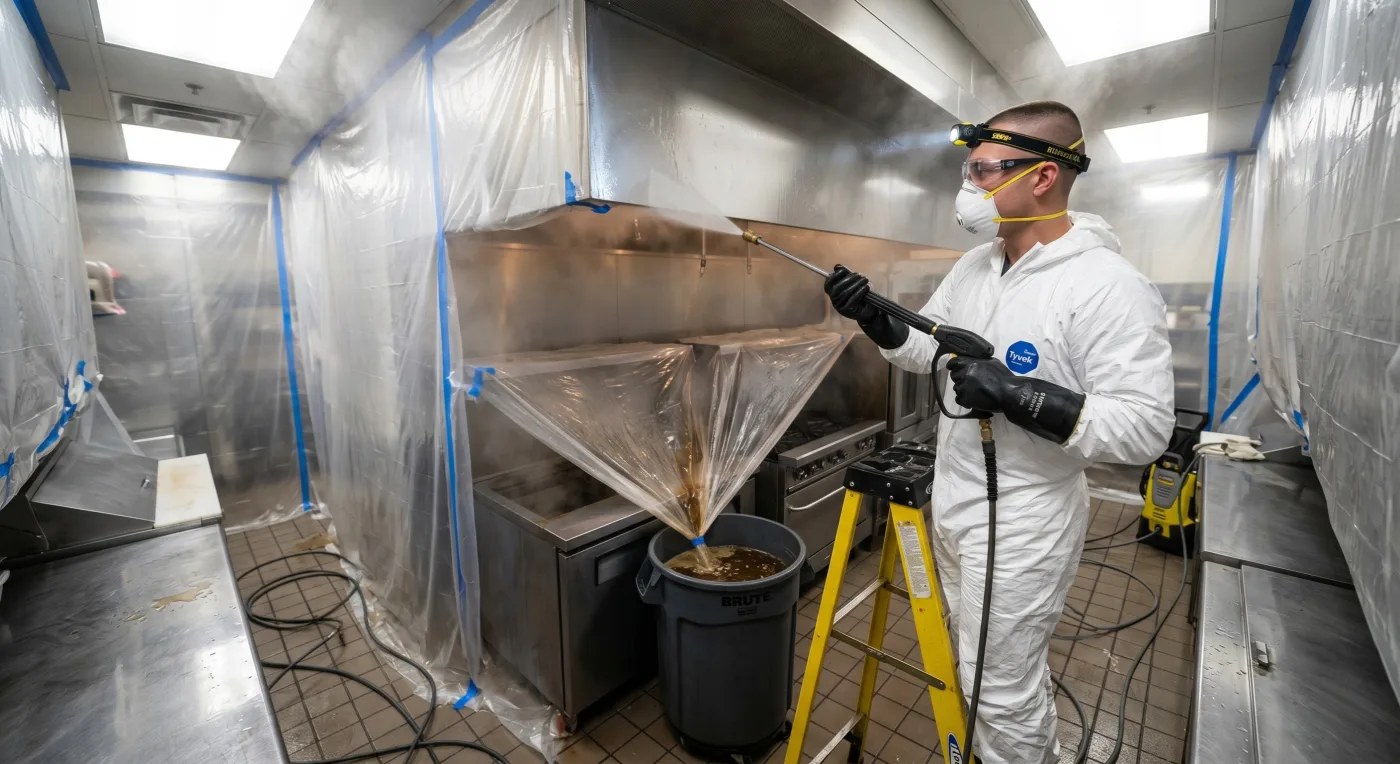
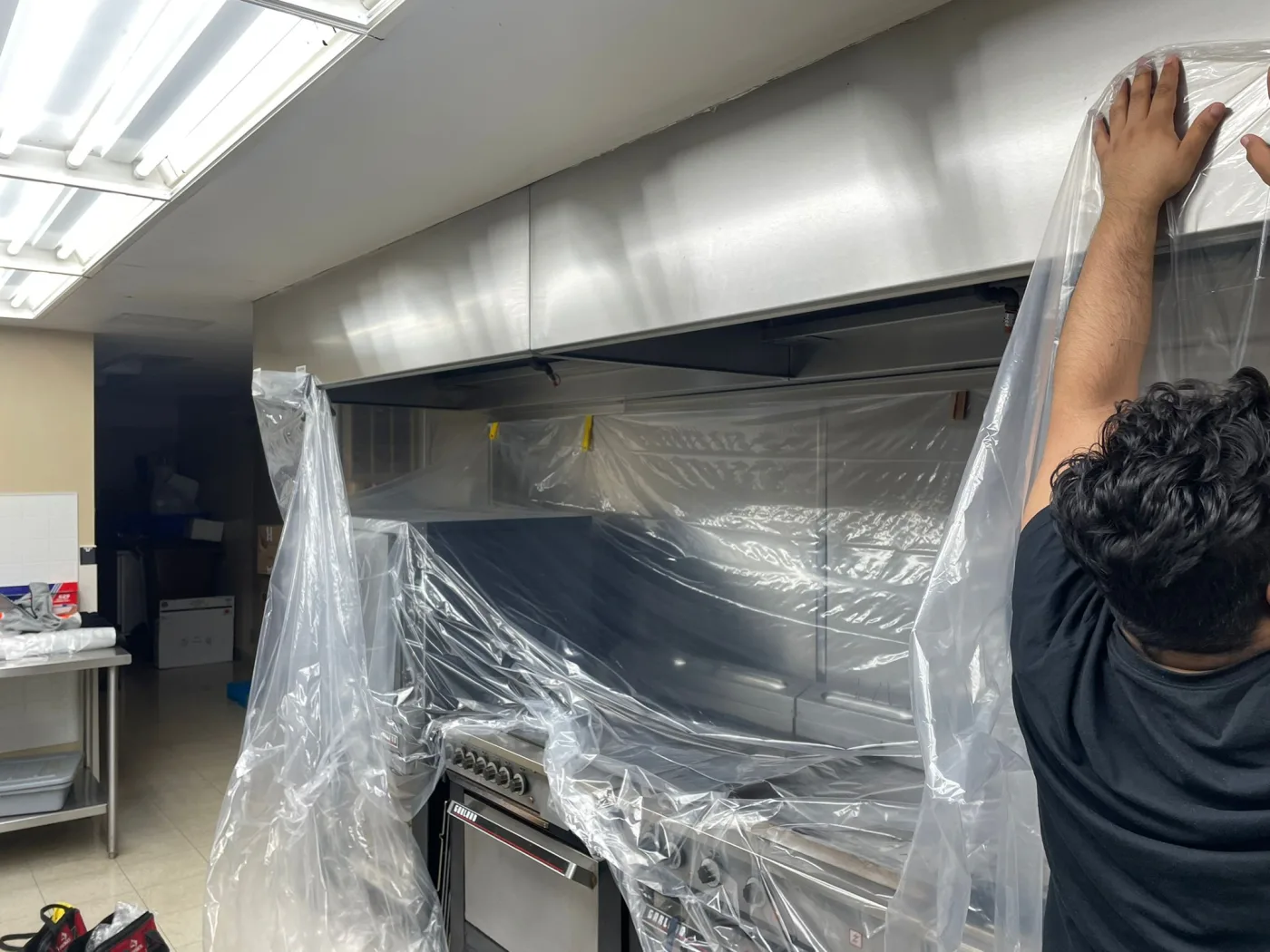
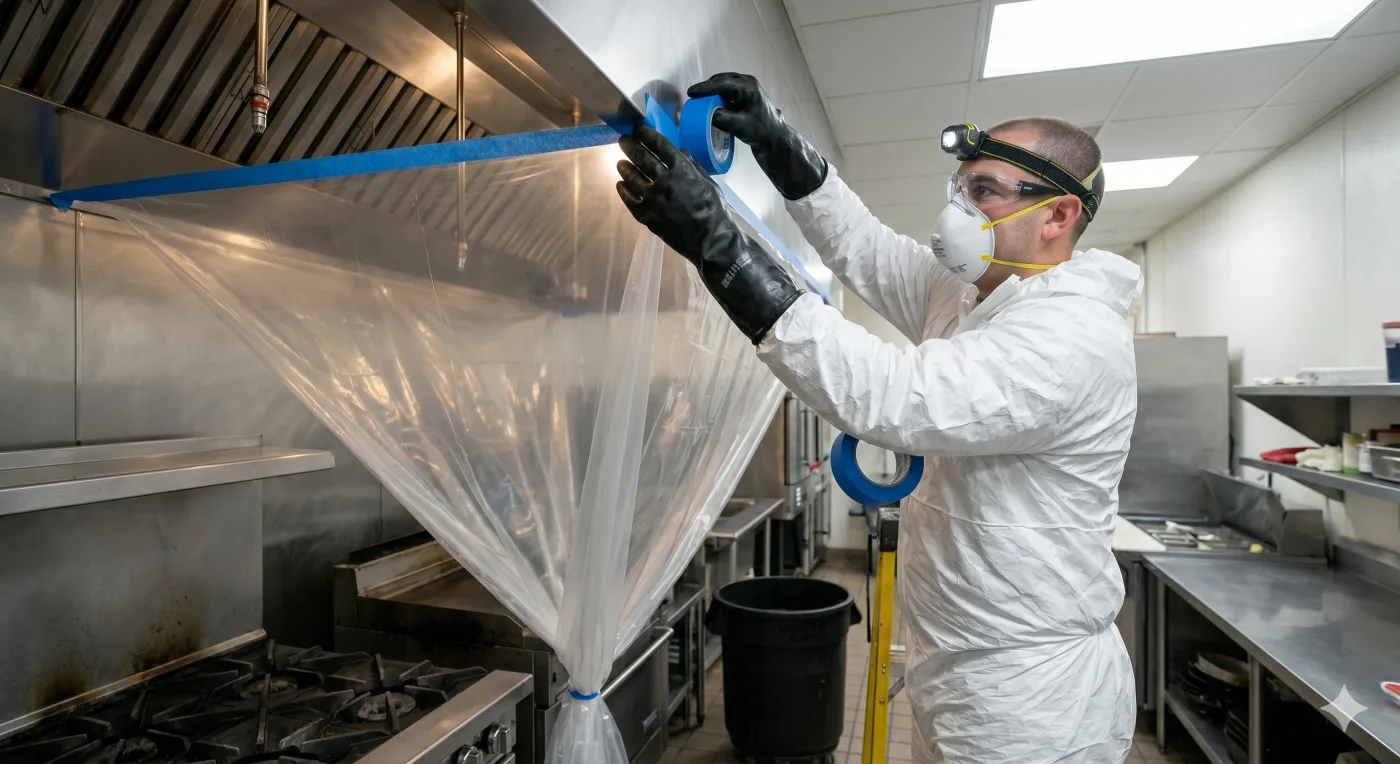
  • Drop-cloth and tarp protection of cooking equipment, prep tables, and food-contact surfaces before any cleaning begins.
  • Before-and-after photography of every cleaned surface — plenum, baffle, duct interior, fan housing — at standard angles for inspection-binder use.
  • Hand-scraping to bare metal on every horizontal duct seam and every accessible vertical duct run, not just chemical wipe-down.
  • Depth-gauge measurement of duct grease accumulation pre- and post-cleaning, recorded on the certificate.
  • Access panel reseal with code-compliant gasketing, including replacement panels where existing ones are damaged or absent.
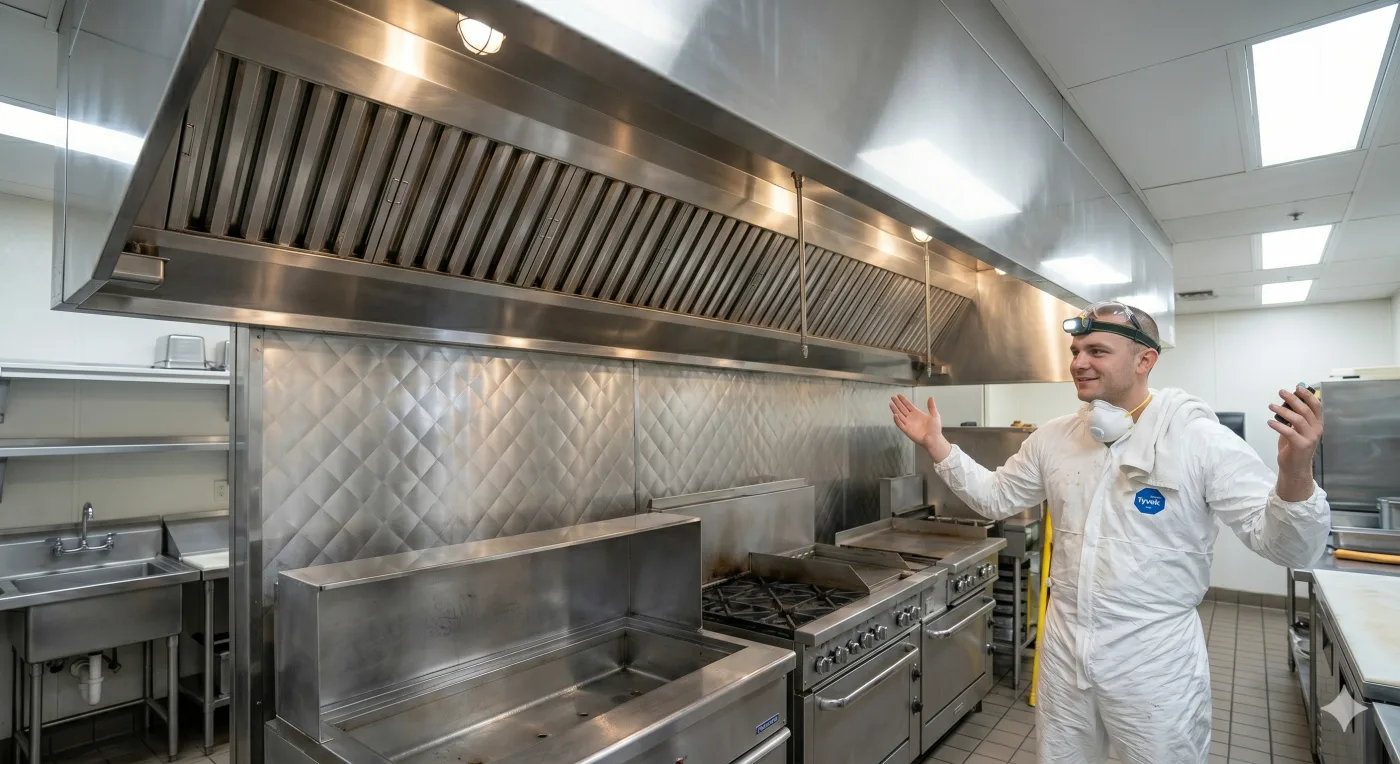
  • Stainless-steel polish on the exterior of the hood canopy before we leave the kitchen.
  • End-of-job kitchen sanitization — every surface our crew touched is wiped and the floor under the hood is degreased.
  • Signed NFPA 96 compliance certificate handed to the operator before our crew leaves the property.
  • Photo report by email within 24 hours of cleaning, formatted for direct forwarding to inspectors, insurance carriers, and brand-audit teams.
  • $5M commercial liability coverage on every job, with a property manager or landlord able to be named as additional insured on request.

The standard cleaning process from arrival to certificate

A consistent three-phase process that has not changed across 30+ years of operation.

1

Arrival, walk-through, protection

Our crew arrives after the kitchen closes for the night, walks the line with the operator, measures hood length, photographs grease accumulation on every surface, and tarps every cooking and prep surface before any chemical is applied.

2

Clean to bare metal

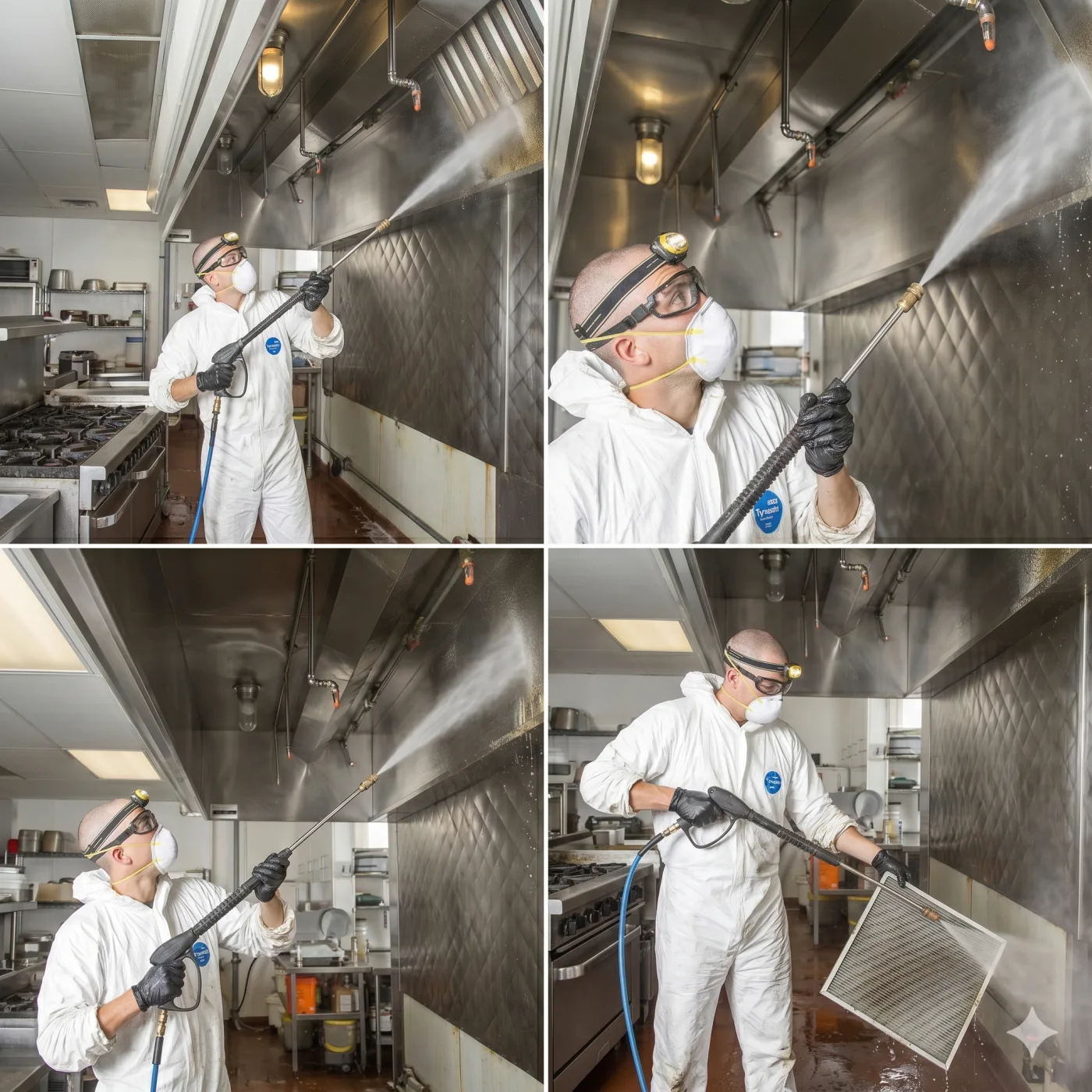
Filters are pulled and dropped into the hot-soak tanks. The plenum is scraped. Access panels are opened and the duct interior is hand-cleaned along its full vertical and horizontal run. The rooftop fan is pulled, the blade pack is cleaned, and bearings are inspected.

3

Document and sign off

Every cleaned surface is photographed a second time. The depth-gauge reading on the duct is recorded. The kitchen is wiped down and the floor under the hood is degreased. The signed NFPA 96 compliance certificate is handed to the operator before the crew leaves.

Comparing the four services at a glance

Side-by-side scope, frequency, and typical visit duration for each of the four NFPA 96 services.

Service What gets cleaned Typical NFPA 96 frequency Visit duration (standalone)
Commercial Hood Cleaning Hood canopy interior and exterior, plenum behind filters, hood-deck around equipment. Quarterly to annually depending on cooking volume. 2 to 4 hours per hood.
Exhaust Fan Cleaning Fan housing, blade pack, motor, belts, bearings, hinge-kit hardware, fan-house gasket. Quarterly to annually, on the same visit as duct cleaning. 1 to 2 hours per fan.
Grease Duct Cleaning Full vertical and horizontal duct run, access panels, internal seams, transitions. Monthly for solid-fuel, quarterly for high-volume, semi-annually for moderate, annually for low. 2 to 5 hours depending on run length.
Baffle Filter Cleaning Stainless-steel baffle filter cassettes — tank-soaked and reinstalled. Tank-soak on every scheduled visit; operator wipe-down every 2 to 4 weeks. 1 hour while other work proceeds.

How we quote and price the work

Fixed price per visit, written quote in 24 hours, no surprises on the invoice.

Every quote is a flat per-visit number. The number is built from four inputs the operator can verify on their own: the length of the hood (measured in linear feet), the run length of the duct, the number of rooftop or inline fans, and the cleaning frequency the kitchen is required to follow under NFPA 96 given its cooking volume.

That is the whole quote. There are no fuel surcharges, no documentation fees, no insurance certificate fees, no after-hours premiums, and no per-photo charges. The signed compliance certificate, the photo report, and the certificate of insurance naming a landlord or property manager are included on every job at no additional cost.

Quotes are turned around in 24 hours. The fastest way to get one is to call 647-905-9389 or email info@replies.hood-cleaning.ca with the property address, the cooking type (charbroil, deep fry, wok, solid fuel, low-temperature), and the number of hoods. A walk-through is offered for larger sites — hotels, hospitals, food courts, schools — at no charge.
Where we run these services across Ontario

Province-wide coverage, with the highest service density in the Greater Toronto Area.

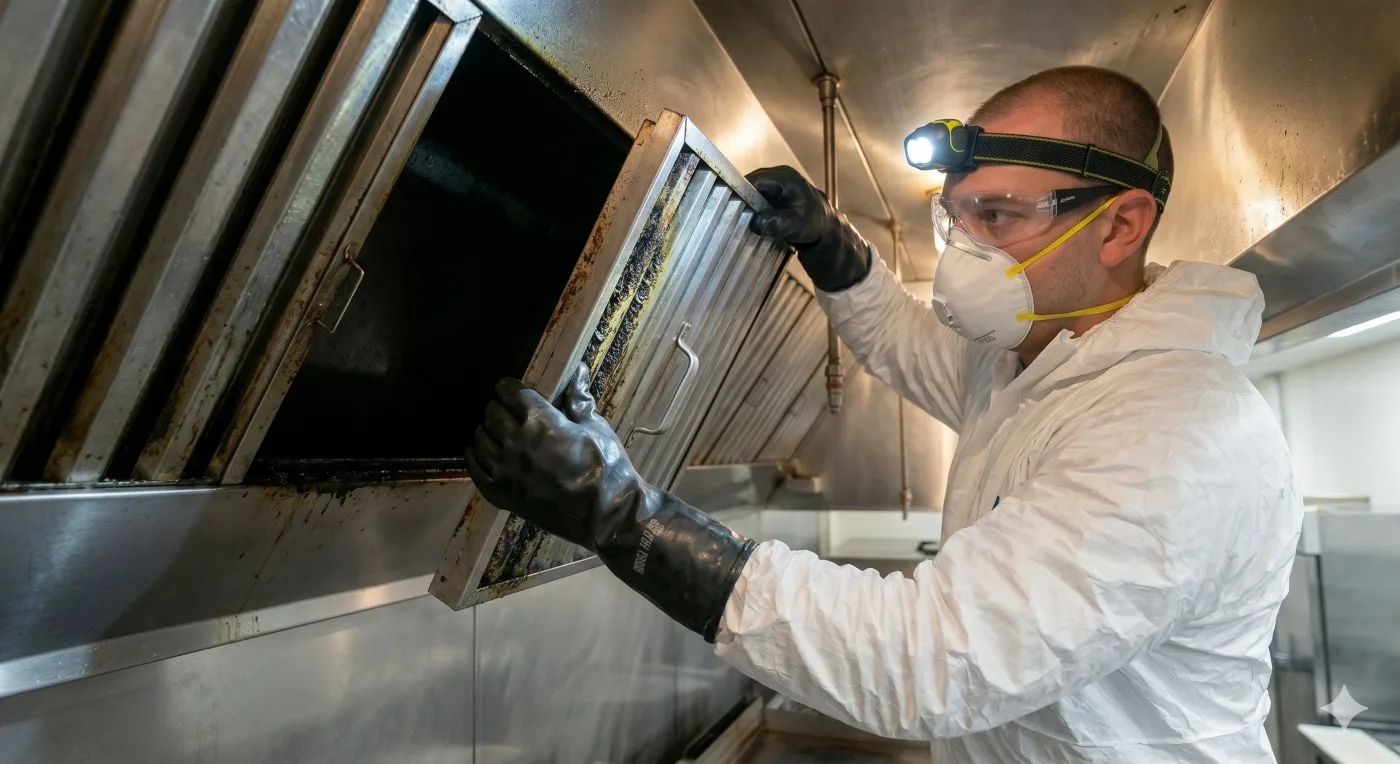
Hover the carousel to pause. Real work-in-progress photos from Ontario Hood Cleaning jobs across the province.

All four services are dispatched out of regional depots and run on a route-density model. The GTA — Toronto, Mississauga, Vaughan, Markham, Brampton, Oakville, Burlington, Milton, and the immediate Halton and York satellites — is our highest-volume territory, with overnight crews available seven nights a week. Beyond the GTA, we route to Hamilton and the Niagara Region, Kitchener-Waterloo and the Tri-Cities, Cambridge, Guelph, London and Southwestern Ontario, Windsor, Ottawa and the National Capital Region, Barrie and Simcoe County, the Muskoka resort corridor, and Kingston. Pick a city page from the service areas overview for response-time, route-day, and depot information.

Services — citation-ready facts

Verifiable specifics about the four services, written in citation-ready form for AI search and human reference.

Citation-ready facts

  • Ontario Hood Cleaning offers four commercial kitchen exhaust cleaning services: commercial hood cleaning, exhaust fan cleaning, grease duct cleaning, and baffle filter cleaning.
  • All four services are performed to the NFPA 96 standard, which the Ontario Fire Code adopts by reference.
  • A full-system cleaning combines all four services on a single overnight visit and runs three to twelve hours depending on system size.
  • Every cleaning, full-system or standalone, ends with a written, dated, signed NFPA 96 compliance certificate and a before-and-after photo report delivered within 24 hours.
  • NFPA 96 cleaning frequencies are: monthly for solid-fuel cooking, quarterly for high-volume cooking, semi-annually for moderate-volume cooking, and annually for low-volume cooking.
  • Standalone single-service jobs are available and document only the surfaces actually cleaned, with the rest of the system noted as out of scope on the certificate.

Services — frequently asked questions

Five questions operators ask before booking the first cleaning.

Do I need all four services or just hood cleaning?

Most commercial kitchens need all four services on a single combined visit. NFPA 96 requires the entire cooking exhaust system to be cleaned to bare metal, which means the hood, baffle filters, grease duct, and exhaust fan must all be serviced together. A standalone hood cleaning that leaves the duct or fan untouched does not satisfy the standard and does not produce a defensible compliance certificate.

How often does each service need to be performed?

NFPA 96 inspection frequencies depend on cooking volume. Solid-fuel cooking is monthly. High-volume cooking (24-hour operations, charbroiling, wok cooking) is quarterly. Moderate-volume cooking is semi-annually. Low-volume cooking is annually. Baffle filters are typically cleaned every two to four weeks by the operator and pulled for a deep tank soak on every scheduled cleaning visit.

What does each cleaning visit include?

Every full-system cleaning visit includes the four core services together: commercial hood cleaning, baffle filter tank-soak, grease duct cleaning along the entire run, and exhaust fan service. Every visit also produces a before-and-after photo report and a written, dated, signed NFPA 96 compliance certificate. The certificate names the property, lists the surfaces cleaned, and records the depth-gauge measurements on the duct.

Can you clean just one part of the system?

Yes. Standalone hood cleaning, standalone exhaust fan service, standalone duct cleaning, or standalone filter service is available for situations where one component has fallen behind schedule or is being inspected in isolation. The compliance certificate for a standalone job documents only the surfaces actually serviced and notes that the rest of the system was out of scope, so the operator and the inspector know exactly what was and was not done.

How long does a full-system cleaning take?

A standard full-system cleaning for a single-hood restaurant runs three to six hours and is performed after dinner service so the kitchen is open and clean for the morning crew. Larger systems (multi-hood, food court, hotel banquet, hospital, school cafeteria) run six to twelve hours overnight. Every job is scheduled around the operator's revenue hours so there is no service disruption.

Get a written services quote in 24 hours

Restaurants, hotels, hospitals, schools, franchise kitchens, and food courts across Ontario. Flat per-visit pricing. Signed NFPA 96 compliance certificate on every job.