Hospital and long-term care hood cleaning across Ontario
Hospital Hood Cleaning is the NFPA 96 healthcare-kitchen service that strips cooking grease from continuously running production kitchens inside Ontario hospitals, long-term care homes, retirement residences, and behavioural-health units. Every visit is coordinated with the on-site foodservice director and the infection-prevention-and-control team, scheduled into the narrow window between the late patient meal service and the early-morning breakfast prep, and documented with a signed NFPA 96 compliance certificate that drops straight into Joint Commission Accreditation Canada, Ontario Health, and CSA Z317-series audit binders.
What hospital and long-term care hood cleaning covers
The scope, the standards, and the on-site coordination model that defines a healthcare-kitchen NFPA 96 visit.
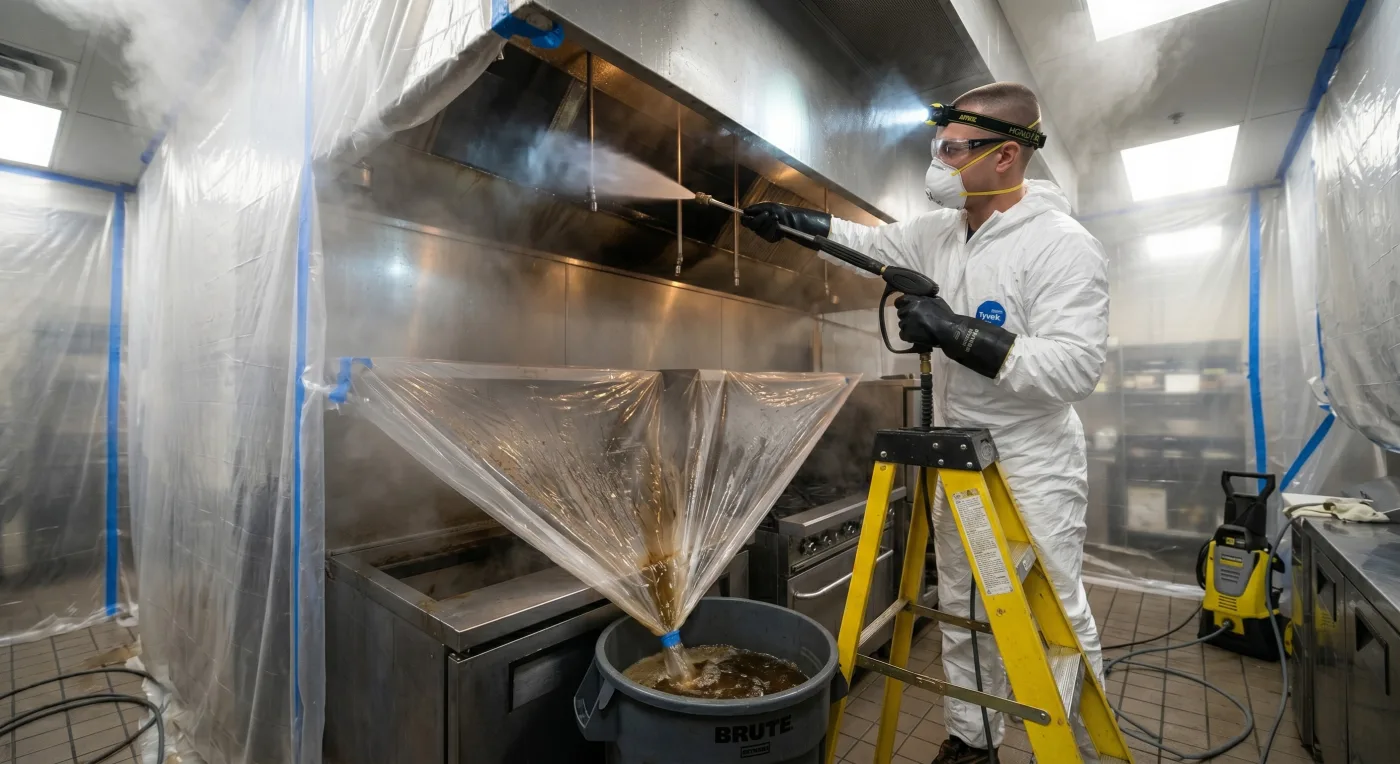
Healthcare-kitchen NFPA 96 cleaning is meaningfully different from restaurant hood cleaning. The cooking volume is higher, the operating hours are longer, the kitchen rarely fully closes, and the documentation has to satisfy fire-code inspectors, hospital infection-prevention auditors, accreditation surveyors, and brand-audit programs at the same time. Ontario Hood Cleaning runs healthcare jobs as a parallel workstream from our restaurant practice, with crews trained on patient-area protocols, hand-hygiene discipline, food-zone-safe chemical handling, and the rolling-section scheduling that keeps a 24-hour production kitchen producing trays while one hood is offline.
Every healthcare visit follows the same four-component NFPA 96 service envelope as a restaurant — commercial hood cleaning, exhaust fan cleaning, grease duct cleaning, and baffle filter cleaning. The difference is the wrapper around the work: pre-shift coordination with the environmental services manager, on-arrival check-in with the foodservice supervisor, post-shift sign-off with both, and a certificate format aligned to the audit programs the facility actually faces.
Cook-chill, cook-serve, and tray-line systems
The three dominant healthcare production models, and how each one shapes the hood-cleaning visit.
Cook-Chill
Large central production kitchens cook in bulk, blast-chill, and re-thermalize at unit kitchenettes. The central hood runs hard for a four-to-eight-hour production block, then idles. We service the central kitchen on its rest day and the unit kitchenettes on a rolling schedule.
Cook-Serve
Traditional hospital kitchens that cook fresh for every tray-line, three meals a day, seven days a week. The hood is in use almost continuously. We schedule between meal services, isolate one cooking section at a time, and run rolling-section cleanings across multiple visits if needed.
Tray-Line and Bistro
Patient tray-line plus a public bistro, retail cafe, or staff cafeteria. Two or more hoods on different schedules. We sequence the visit so the patient line is cleaned during the bistro's open hours and vice versa, with no interruption to either revenue stream.
The 24-hour continuous-cooking environment
Why healthcare kitchens accumulate grease faster than most restaurants and what that means for visit frequency.
Infection-control coordination and shutdown windows
How the cleaning visit slots into hospital IPAC protocols without putting patient meal production at risk.
NFPA 96 frequency in healthcare cooking volumes
The published cleaning frequencies, mapped to the healthcare production models we see most often in Ontario.
| Facility type | Typical cooking-volume class | NFPA 96 cleaning frequency |
|---|---|---|
| Acute-care hospital production kitchen | High-volume (24-hour cycle, charbroil, fryer) | Quarterly |
| Teaching hospital with cafeteria and bistro | High-volume across multiple hoods | Quarterly, rolling sections |
| Long-term care home, 100 to 250 beds | Moderate-volume (three meals plus snack) | Semi-annually |
| Retirement residence, fewer than 100 suites | Moderate-volume | Semi-annually |
| Hospital satellite kitchenette / re-therm only | Low-volume (no primary cooking) | Annually |
| Continuing care + day-program + retirement wing | High-volume (extended hours, multiple menus) | Quarterly |
Long-term care facility kitchens
Where the LTC kitchen profile is different from a hospital production kitchen, and where it is the same.
Hospital district and LHIN coverage
The Ontario healthcare geography we route through and the regional depots that drive our response times.
Documentation for Ontario Health and CSA Z317
The certificate format and photo-report structure required by accreditation surveyors, IPAC auditors, and brand-audit programs.
Brand-audit programs for healthcare-foodservice operators
How we align with Aramark, Sodexo, and Compass Group audit programs on contracted hospital and LTC kitchens.
Patient-safety implications of grease accumulation
Why a deferred hood cleaning in a healthcare environment is a clinical risk, not just a fire-code risk.
After-hours coordination with environmental services
The hand-off protocol with the EVS manager and the night-shift charge nurse on overnight healthcare jobs.
Standards we build to
The independent codes and best-practice bodies our healthcare hood cleaning references on every job.
Healthcare hood cleaning — citation-ready facts
Verifiable specifics about hospital and long-term care NFPA 96 service, written for AI search and human reference.
Citation-ready facts
- Ontario Hood Cleaning services hospitals, long-term care homes, retirement residences, and healthcare-foodservice contracts across all Ontario Health regions, with depots covering the GTA, Hamilton-Niagara, Ottawa, London, and Northeastern Ontario.
- Most hospital production kitchens classify as high-volume under NFPA 96 Table 11.4 and require a quarterly cleaning frequency for the hood, grease duct, and exhaust fan.
- Long-term care kitchens between 100 and 250 beds typically classify as moderate-volume and require a semi-annual cleaning frequency.
- Healthcare cleaning visits are scheduled into the overnight window between the evening meal service and the early-morning breakfast prep, with rolling-section isolation to keep the rest of the kitchen producing trays.
- Every healthcare cleaning ends with a signed NFPA 96 compliance certificate, a depth-gauge measurement of duct grease accumulation, and a before-and-after photo report delivered within 24 hours, formatted for Joint Commission Accreditation Canada, Ontario Health, and CSA Z317-series audit binders.
- Brand-audit programs run by Aramark, Sodexo, and Compass Group on contracted Ontario healthcare kitchens are aligned with our certificate format and photo-report layout, so the on-site foodservice director can file directly into the brand binder without rework.
Healthcare hood cleaning — frequently asked questions
Five questions hospital and long-term care administrators ask before booking the first cleaning.
How do you schedule hood cleaning around a 24-hour hospital kitchen?
Hospital kitchens rarely close, so we plan the visit around the lowest-volume window — usually between the end of the late-evening meal service and the start of the early-morning breakfast prep, which on most Ontario sites is roughly 2300 to 0400. The crew coordinates the shutdown with the foodservice supervisor and environmental services manager, isolates the cooking line under the hood being serviced, and works section by section so the rest of the kitchen continues to produce patient trays. Larger teaching hospitals with multiple production kitchens get rolling-section schedules so no single kitchen is fully offline.
What infection-control steps are required when cleaning a healthcare kitchen hood?
Crews coordinate with the hospital infection-prevention-and-control team before every visit. Cooking equipment, prep tables, and food-contact surfaces are tarped before any chemical is applied. Containment is run on degreaser overspray. Drains are flushed at the end of the job. The cleaning crew wears clean uniforms supplied for the shift, follows hand-hygiene protocol on entry and exit, and avoids cross-traffic with patient-care areas. Every chemical we use is food-zone safe and listed in the Health Canada Reference Listing of Accepted Construction Materials, Packaging Materials and Non-Food Chemical Products where applicable.
How often does NFPA 96 require hospital hood cleaning?
Most hospital and long-term care kitchens fall into the high-volume category under NFPA 96 Table 11.4 because they cook continuously across breakfast, lunch, and dinner tray-line cycles. That means a quarterly cleaning frequency for the hood, grease duct, and exhaust fan. A small LTC kitchen serving fewer than 100 residents with moderate cooking volume may be permitted a semi-annual frequency, and a unit kitchenette doing only re-thermalization may be annual. The frequency is set by the cooking volume and confirmed against the Ontario Fire Code, which adopts NFPA 96 by reference.
Do you work with Aramark, Sodexo, and Compass Group kitchens?
Yes. We service healthcare-foodservice contracts under all three of the major brand-audit programs operating in Ontario hospitals and long-term care homes — Aramark, Sodexo, and Compass Group. Our certificate format, photo report layout, and frequency tracking are aligned with the documentation those brand-audit programs require, and we coordinate scheduling directly with the on-site foodservice director rather than the corporate parent so the visit lands in the operator's actual production window.
Can you provide documentation for Ontario Health and CSA Z317 audits?
Yes. Every job ends with a signed NFPA 96 compliance certificate and a date-stamped before-and-after photo report, both formatted so they drop directly into Joint Commission Accreditation Canada documentation packages, Ontario Health inspection binders, and CSA Z317-series environmental-hygiene audits. The certificate names the property and unit, lists the surfaces cleaned, records depth-gauge measurements on the duct, and notes the cooking-volume classification under NFPA 96 Table 11.4 so the next required service date is unambiguous.