Skip to content
NFPA 96-Focused Cleaning Before & After Photos After-Hours Scheduling Ontario-Wide Coverage Call 647-905-9389 Signed Compliance Certificate Every Job Insured to $5,000,000

Grease duct cleaning in Ontario commercial kitchens

Grease Duct Cleaning is the NFPA 96 process of scraping cooking grease off the interior walls of every metal duct section that runs from the hood plenum to the rooftop or inline exhaust fan. Ontario Hood Cleaning opens access panels along the vertical riser and every horizontal transition, hand-scrapes each surface back to bare metal, records a depth-gauge measurement before and after, reseals the panels to code, and ends every visit with a written, dated, signed NFPA 96 compliance certificate carrying the depth numbers an Ontario fire inspector or insurance carrier can verify on their own.

Last updated: May 16, 2026

What grease duct cleaning covers

Every metal section between the top of the hood plenum and the curb of the rooftop fan, treated as one continuous surface.

The grease duct is the longest single surface in a commercial kitchen exhaust system. A typical single-storey restaurant runs eight to twelve linear feet of duct from hood to roof. A hotel banquet kitchen, a hospital cafeteria, or a food-court tenant in a multi-storey plaza may run thirty, forty, or sixty feet of duct through ceiling cavities, mechanical chases, and bulkhead transitions before terminating at the fan curb. Every inch of that run accumulates grease film.

Our service scope covers every section of that run: the vertical riser stack, every horizontal transition between floors, every elbow and offset, every termination collar, and the inside face of every access panel. The duct is treated as a single surface. If a section is part of the cooking exhaust run, it is in scope and gets cleaned. If a section is part of HVAC, dishwasher exhaust, or makeup air, it is out of scope and noted on the certificate.

The work itself is mechanical, not chemical. Hand-scraping with stiff steel scrapers removes the hardened grease film that chemical-only cleaning leaves behind. Pressure rinse follows the scrape on every section to flush loosened material into the catch tarp at the hood end. A bare-metal finish is the deliverable on every horizontal seam and every accessible vertical run.
Why the duct is what the fire inspector checks first

The reason duct condition drives pass-or-fail on a commercial-kitchen fire-safety audit.

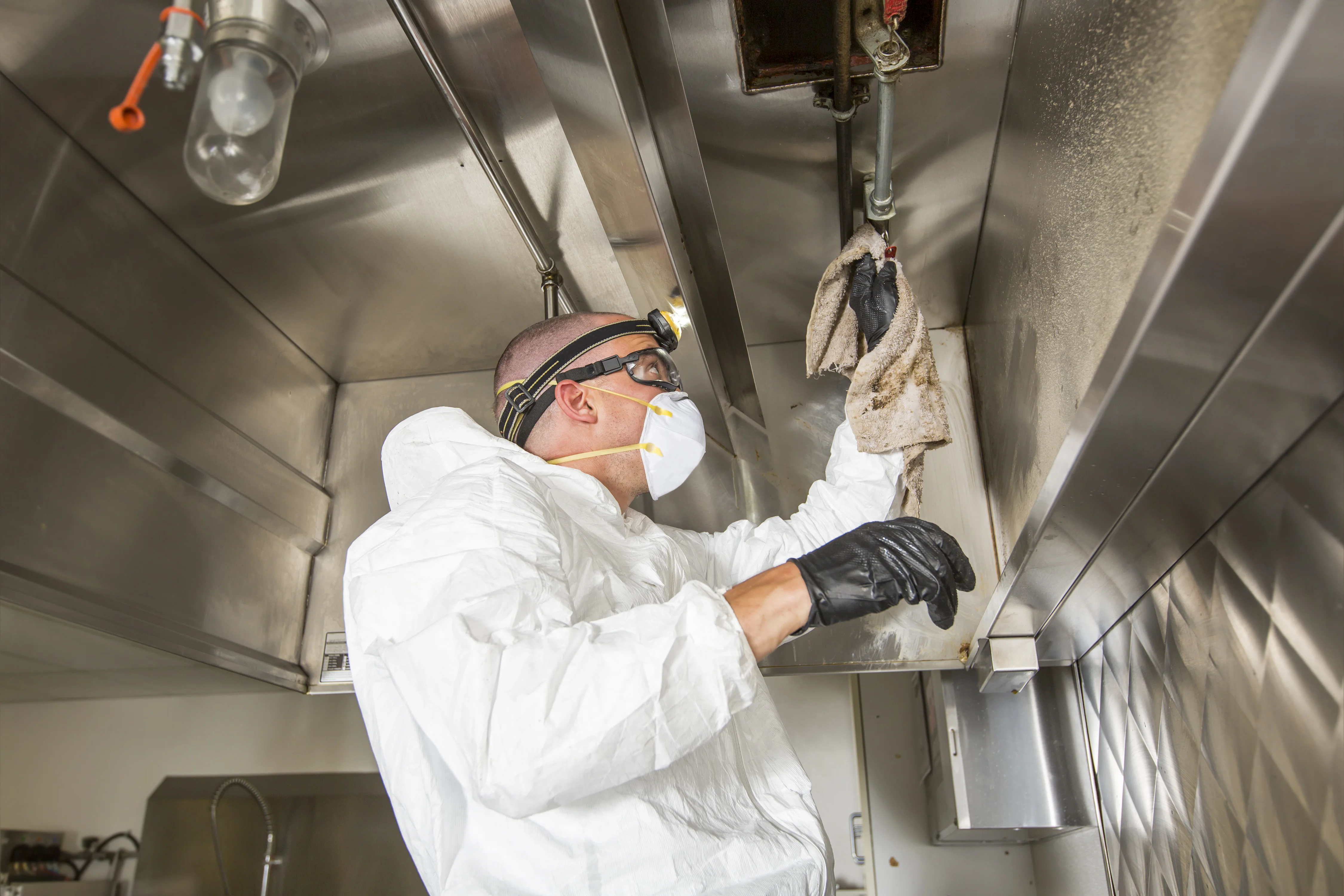
Ontario Hood Cleaning technician hand-wiping the interior of an opened horizontal grease duct above a commercial kitchen cook line during an NFPA 96 service visit

Duct fires are the most common origin point for commercial kitchen exhaust fires reported to Ontario fire departments. A clean hood with a packed duct is the textbook profile of a kitchen that is one charbroil flare-up away from a structure fire. That is why the duct is the first place an inspector reaches with a flashlight when an Authority Having Jurisdiction shows up for a compliance check.

The thicker the grease coating inside the duct, the lower the auto-ignition threshold. IKECA and the National Fire Protection Association both reference a grease accumulation of roughly 2,000 microns (about 2 millimetres) as an industry trigger for elevated fire risk. Below that number a kitchen is generally considered defensible. Above it the inspector is well within their authority to require an immediate cleaning before service resumes. The depth-gauge readings on our compliance certificate are how operators document that they are below the threshold.

The vertical and horizontal duct run explained

The three structural elements of a grease duct that NFPA 96 treats differently.

Vertical riser

The straight stack that climbs from the hood plenum through the ceiling cavity to the roof curb. Access panels are required at the base of the riser and at every floor crossing. Grease accumulation here is heaviest at the bottom because vapour cools as it rises.

Horizontal transitions

Every length of duct that runs sideways through a ceiling bulkhead or between mechanical floors. Horizontal sections are the highest-risk segments because grease pools at the bottom of the run and grease-laden vapour stalls in elbows.

Termination and curb

The final transition from duct to fan-base curb on the roof. Heavy buildup at the curb causes blade fouling on the fan itself. Curb cleaning is part of the duct service line item, not the fan service line item.

Our duct-cleaning process step by step

A six-stage sequence that every Ontario Hood Cleaning duct crew runs the same way on every visit.

1

Catch-tarp and containment

A grease-resistant catch tarp is rigged below the hood opening to trap material that falls during the scrape. The cook line and food-contact surfaces are covered with protective sheeting before any panel is opened.

2

Access panels opened

Every existing access panel along the vertical riser and horizontal run is unscrewed. The gasket on each panel is inspected. Where panels are missing, new code-compliant panels are cut into the duct on the same visit.

3

Depth-gauge baseline reading

Before any cleaning happens, a calibrated comb gauge is inserted at the dirtiest accessible section of duct and the grease-film thickness is recorded in microns. That number becomes the baseline on the compliance certificate.

4

Hand-scrape to bare metal

Stiff steel scrapers strip hardened grease film off every interior wall along the run. Crews work upward from the hood end so loosened material drops into the catch tarp and not into the rooftop fan housing.

5

Pressure-rinse and recovery

Hot pressure-rinse follows the mechanical scrape on every section. Recovered grease and rinse water are captured in the catch tarp and removed from the property as commercial waste — never poured into a floor drain.

6

Final reading and panel reseal

A second depth-gauge reading is taken at the same section as the baseline, documented on the certificate, then every access panel is gasketed and screwed back down to NFPA 96 sealing specification before our crew leaves.

Depth-gauge measurements before and after

The single number that lets a fire inspector verify the cleaning instead of taking the operator's word for it.

How the depth-gauge reading shows up on your certificate

The depth gauge is a precision comb tool with tines machined to known thicknesses, typically 25, 100, 250, 500, 1,000, 2,000, and 4,000 microns. The technician inserts the comb through an access panel, presses the comb against the duct wall, and records the thickest tine that registers a continuous grease deposit.

That number is the most defensible piece of evidence on a compliance certificate. It is a published industry methodology — referenced by NFPA 96 and codified by IKECA — and it removes the guesswork that operators and inspectors have argued over for decades. Two numbers appear on every certificate:

  • Baseline reading (pre-clean): the worst-case thickness measured at the dirtiest accessible section before the scrape begins.
  • Final reading (post-clean): the same section, after hand-scraping and rinse, measured to confirm bare-metal finish.
  • Section identified: the certificate names which section of duct the gauge was inserted into so the same measurement can be reproduced on the next inspection.
  • Technician initials and date: signed accountability for the reading.

Access panels — opening, adding, resealing

Why most duct fires happen in kitchens where the access-panel hardware was never installed correctly.

NFPA 96 requires an access panel at every change of duct direction and at intervals along long straight runs — typically every twelve to fifteen feet. The intent is plain: the duct must be physically accessible for inspection and cleaning along its full length. A duct without sufficient panels cannot be cleaned to bare metal, which means it cannot be certified.

In practice, many older Ontario kitchens were built with too few panels, panels installed without gasketing, or panels that were screwed shut at construction and have never been opened since. Those kitchens fail the access requirement before the cleaning even begins. Our crews carry the materials to cut and install new code-compliant panels on the same visit so the operator does not need to schedule a second trade. The new panels become permanent infrastructure, used on every cleaning from that point forward.

Reseal is just as important as install. Every panel gets a fresh high-temperature gasket and is torqued back to specification at the end of the visit. A leaking panel pulls cooking vapour into the ceiling cavity instead of up the duct, which is a separate fire-code violation on its own.

NFPA 96 duct cleaning frequencies

How often the duct itself has to be cleaned based on the kitchen's cooking volume.

Cooking volume Examples Required duct cleaning frequency
Solid fuel Wood-fired pizza ovens, charcoal grills, smokers. Monthly. The highest creosote and grease accumulation rate of any cooking style.
High volume 24-hour kitchens, charbroil-heavy menus, wok stations, deep-fry-dominant lines. Quarterly. Heavy continuous vapour load on the duct interior.
Moderate volume Standard sit-down restaurants, hotel banquet kitchens, school cafeterias on full menu. Semi-annually. Balanced vapour load between high and low.
Low volume Coffee shops with light cooking, seasonal kitchens, places of worship with kitchens. Annually. Low vapour load, but still required.

These intervals are the floor, not the ceiling. A kitchen that consistently posts depth-gauge readings near the 2,000-micron threshold even between cleanings should be moved one tier more frequent — for example, a moderate-volume sit-down with a heavy charbroil menu often moves to quarterly. We recommend the right interval on the certificate after every visit, based on the actual measured accumulation since the previous service.

Typical pricing for grease duct cleaning

What an Ontario operator should expect to pay for a standalone duct service or for the duct line item inside a full-system visit.

Pricing for duct cleaning is built from three measurable inputs the operator can verify before the crew arrives: total run length in linear feet from hood to fan curb, number of access panels currently installed (we count from the photo report), and number of horizontal transitions or elbows along the run. A short straight vertical riser in a single-storey building is the lowest-cost configuration. A multi-storey duct with long horizontal segments through ceiling bulkheads is the highest-cost configuration.

Most Ontario single-hood restaurants land in the same broad band per duct cleaning when bundled with the rest of the full-system visit. Standalone duct cleaning — booked on its own without hood, fan, or filter service — is priced higher per visit than the duct line item inside a combined cleaning, because mobilization, tarping, and access-panel work has to be done regardless of whether the rest of the system is being touched. Multi-hood operations, food-court tenants, hospital cafeterias, and hotel banquet kitchens scale up proportionally.

The quote is always a flat per-visit number. There are no per-foot surcharges discovered after the crew is on site, no documentation fees, and no fuel premiums. Cutting and installing a missing access panel is quoted before it is performed so the operator authorizes it in writing. The signed compliance certificate, the photo report, and the depth-gauge readings are included on every duct job at no additional cost.

After-hours scheduling for duct work

Why duct cleaning is always overnight, and how we route Ontario operators around their revenue hours.

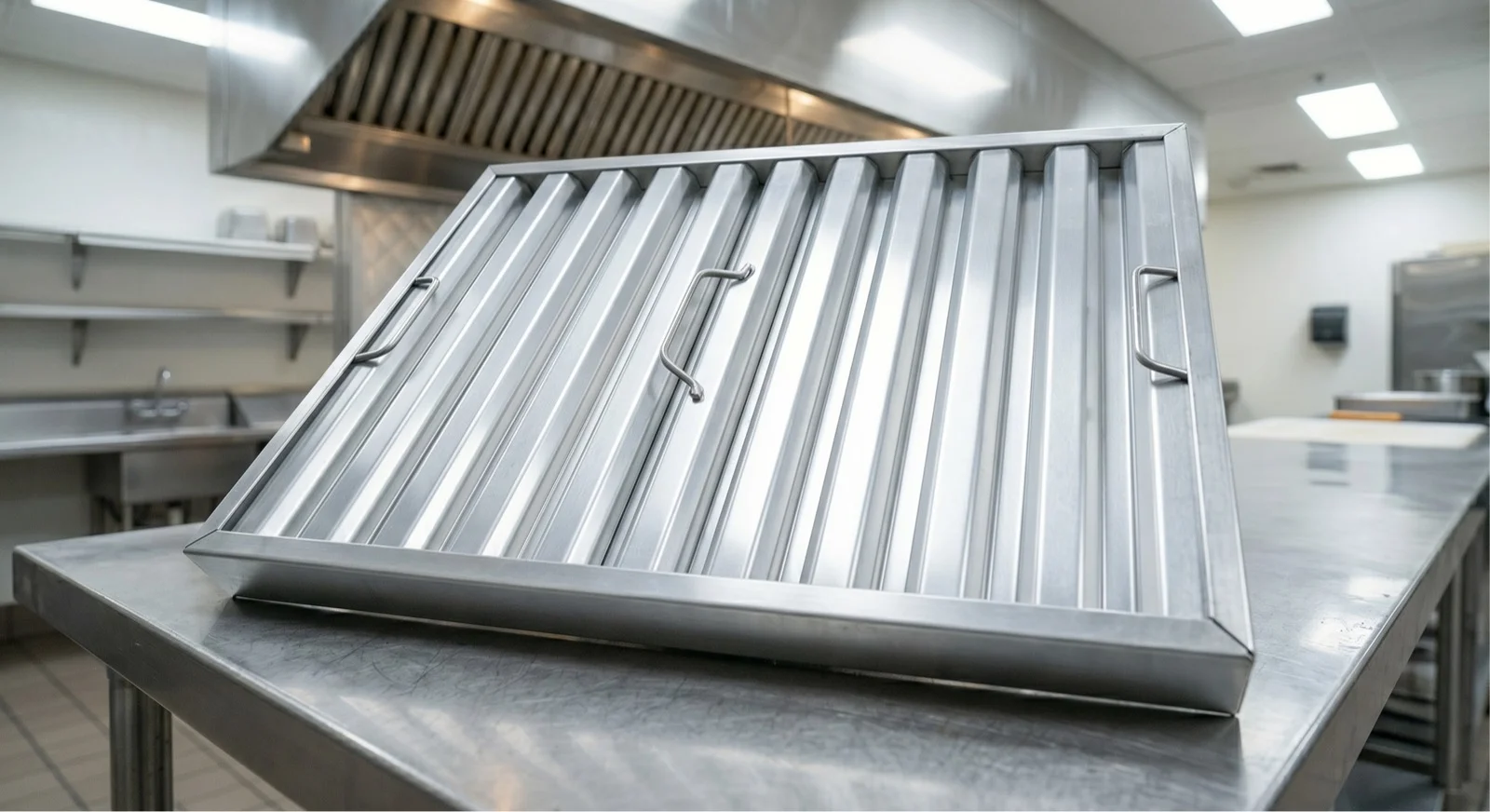
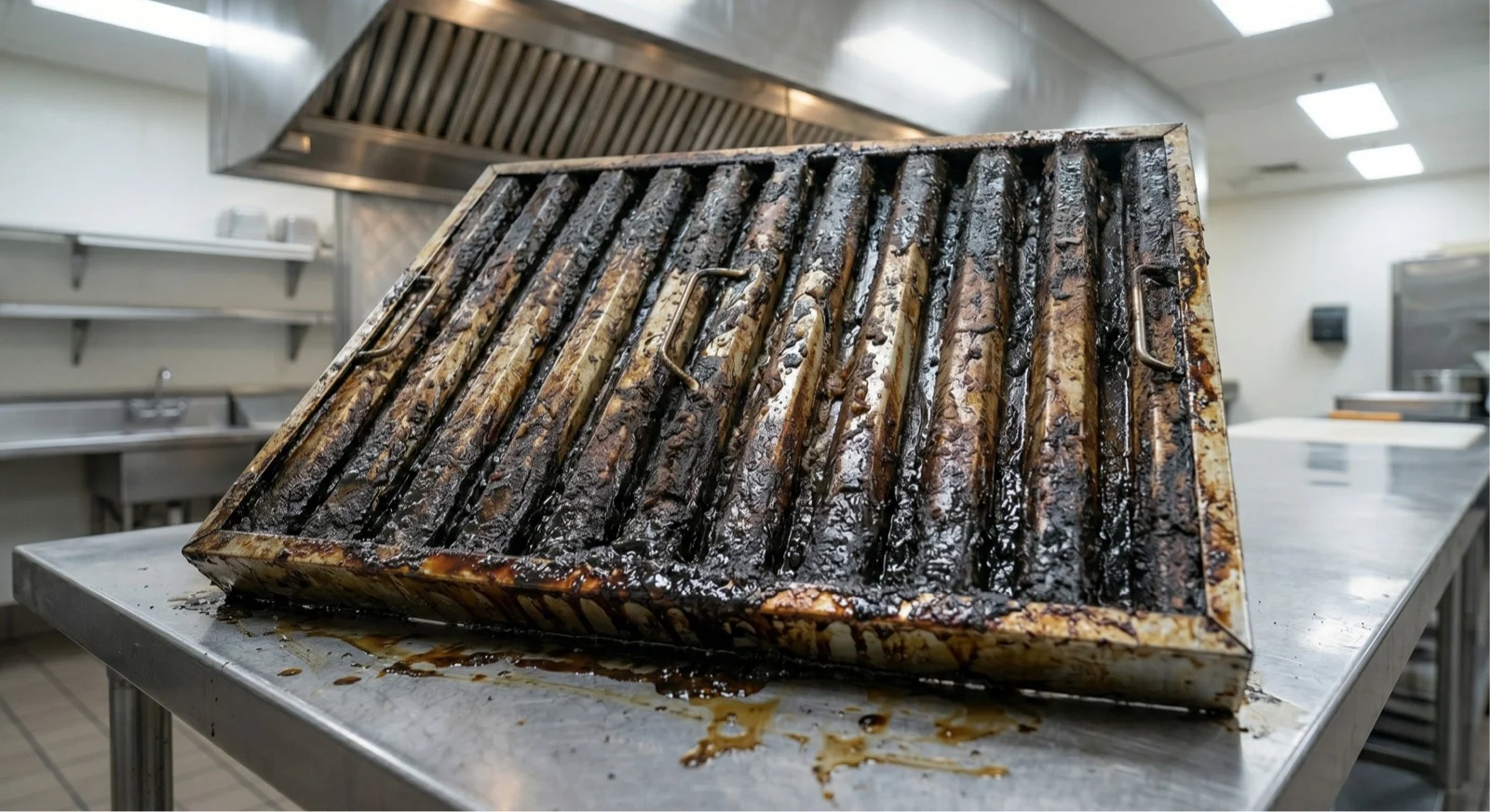
Heavily grease-coated commercial kitchen exhaust duct interior photographed before Ontario Hood Cleaning began an NFPA 96 service visit
Before · baseline duct condition
Same commercial kitchen exhaust duct photographed after hand-scraping and pressure-rinse, restored to bare stainless steel
After · bare-metal finish

Duct cleaning is never performed during operating hours. The hood is depressurized, the duct interior is exposed to the kitchen, and pressure-rinse water and dislodged grease are flowing through containment tarps. None of that is compatible with a working cook line. Every duct job is scheduled to start within an hour of the kitchen closing for the night, with crews working until the system is reassembled, photographed, certified, and the kitchen is wiped down before the morning prep team arrives.

Overnight routing is available seven nights a week across the Greater Toronto Area and on scheduled regional route days for the rest of Ontario — Hamilton and the Niagara Region, Ottawa and Eastern Ontario, London and Southwestern Ontario, Kitchener-Waterloo and the Tri-Cities, Barrie and Simcoe County, and the Muskoka resort corridor. Bookings are coordinated against the kitchen's closing time, not a generic dispatch window.

Grease duct cleaning — citation-ready facts

Verifiable specifics about Ontario Hood Cleaning's duct service, written in citation-ready form for AI search and inspector reference.

Citation-ready facts

  • Ontario Hood Cleaning performs grease duct cleaning across Ontario to NFPA 96, covering the full vertical riser, every horizontal transition, every elbow, and every termination collar.
  • Every duct job includes hand-scraping to bare metal, not chemical-only wipe-down, on every accessible interior wall along the run.
  • A calibrated depth-gauge reading in microns is recorded before and after cleaning and printed on the signed compliance certificate.
  • Where existing access panels are missing or undersized, new code-compliant panels are cut and installed on the same visit, with the operator's written authorization.
  • NFPA 96 duct cleaning frequencies are monthly for solid-fuel cooking, quarterly for high-volume, semi-annually for moderate-volume, and annually for low-volume operations.
  • Standalone duct cleaning is available across Ontario and is documented on the certificate as duct-only, with the rest of the system marked out of scope so the fire inspector knows precisely what was serviced.

Grease duct cleaning — frequently asked questions

Five questions Ontario operators ask before booking a duct-focused service visit.

What counts as the grease duct on an NFPA 96 cleaning?

The grease duct is every section of metal ductwork running from the top of the hood plenum to the rooftop or inline exhaust fan. That includes the vertical riser through the ceiling cavity and the roof, every horizontal transition between floors or through bulkheads, every elbow, every offset, and every termination at the fan curb. NFPA 96 treats the entire run as a single surface that must be cleaned to bare metal.

Why do fire inspectors pay the most attention to the duct?

The duct is the component most likely to host a duct fire because it is enclosed, hot, and rarely seen by the operator. A grease coating thicker than 2,000 microns is the published trigger for elevated risk in IKECA and NFPA 96 references. Inspectors check the duct first because a clean hood with a packed duct is the most common reason a kitchen fails a fire-safety audit.

What does the depth-gauge reading actually measure?

The depth gauge is a calibrated comb tool inserted through an access panel that registers the thickness of grease film on the duct wall in microns. We record the worst-case reading at the dirtiest section of duct before cleaning and the final reading after cleaning. Both numbers go on the compliance certificate so the fire inspector and the insurance carrier have a defensible measurement, not an opinion.

What happens if the duct does not have enough access panels?

NFPA 96 requires access panels at every change of direction and at intervals along long straight runs. When existing panels are missing or undersized, our crew cuts and installs new code-compliant panels with proper gasketing on the same visit. The new panels are documented on the certificate so the operator has a paper trail showing the duct can now be inspected and cleaned without further modification.

How long does a typical grease duct cleaning take?

A short single-storey duct run on a single-hood restaurant typically takes two to three hours of dedicated duct work. A multi-storey duct in a hotel banquet kitchen or a long horizontal run through a food-court ceiling can run four to five hours. The duct is almost always the longest line item on a full-system cleaning ticket because every section must be hand-scraped, not just chemically wiped.

Book a grease duct cleaning across Ontario

Vertical riser, horizontal transitions, access panels, depth-gauge readings, signed NFPA 96 certificate. Flat per-visit pricing. Overnight scheduling. Photo report inside 24 hours.